skip to main |
skip to sidebar
There are, according to a classic Zen Buddhist text, a little under six and a half billion moments in one 24-hour day, 65 of them in a finger-snap.
If you snap your fingers and do so 98,463,077 times over the next 24 hours, "you will experience the truly intimate awareness of knowing exactly how you spent every single moment of a single day of your life.
She sat back on her heels and nodded. The thought experiment she proposed was certainly odd, but her point was simple. Everything in the universe is constantly changing, and nothing stays the same, and we must understand how quickly time flows if we are to wake up and truly live our lives.
That's what it means to be a time being, old Jiko told me, and then she snapped her crooked fingers again. And just like that, you die."
That, it seems to me, is why spending at least part of each day in the present moment, not scripting, planning, looking back, anticipating, etc etc etc - is so supremely important. Being a time being is to be less frightened of time passing because time beings are truly living in and with time.
To understand how quickly time flows is to stop being anxious about it. To accept that everything is always changing, at its own speed, is to let go of what cannot, in any case, be held on to.
The Zen text is Shobogenzo, by Dogen. The novel Jiko and the rest of the above quotation is taken from is :
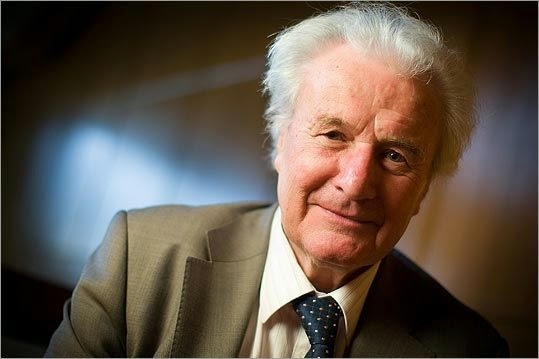
Wonderful interview on BBC4 a few weeks ago with the conductor Sir Colin Davis, not long before he died.
The interviewer asked him about age and death; Davis said he wasn't scared of dying, and the interviewer asked him if he thought there was a life after death. Davis was, I reckon, getting a bit fed up with such questions, so he looked straight at the interviewer and said "I don't know; maybe you can help us out here."
Lovely moment. It showed the ultimate futility of banging away at this question, and the humility of a great man faced with an unanswerable question.
Similarly, a Zen master (look, don't expect references and footnotes from me, OK? I read it somewhere, maybe Brad Warner) was asked by his student "is there a life after death?"
"I don't know," asnwered the ZM.
"I thought you were a Zen Master," said the disappointed student.
"I am, but not a dead one," he snapped.
In China recently to see family members, there was some down time and I got some reading done. (No funerals to work on.)
This man,
Alan Watts, is one of a rare breed who, by their learning and their eloquence, help the West to understand the East, in terms of religions and philosophies. In Beijing, I read his autobiography, "In My Own Way." It's a curious mix of intimate and fascinating memoir, and writings about key beliefs and experiences. He also has an odd habit of listing people he knows; nice for them, but tedious perhaps for those of us in different and later circles! But he did know and meet some fascinating people.
Watts studied and interpreted Chinese Buddhism and Taoism, and Japanese Zen. His book "The Way of Zen" way back in the 1960s, was for many of us our first contact with something that seemed, and seems, very important; a particular experience that is ultimately beyond verbal concepts and dualistic distinctions. In an essay, "This Is It," he writes thus about it:
"There is really no satisfactory name for this type of experience. To call it mystical is to confuse it with visions of another world, or of gods and angels. To call it spiritual or metaphysical is to suggest that it is not also extremely concrete and physical, whilst the term "cosmic consciousness" itself has the unpoetic flavour of occultist jargon."
He does his best:
"To the individual thus enlightened it appears as a vivid and overwhelming certainty that the universe, precisely as it is at this moment, as a whole and in every one of its parts, is so completely right as to need no explanation or justification beyond what it simply is."
and "the central core of the experience seems to be the conviction, or insight, that the immediate now, whatever its nature, is the goal and fulfilment of all living."
This was written long before Jon Kabat-Zinn developed mindfulness meditation techniques from Zen methods, to help Westerners not from a meditative religious culture to live in "the immediate now."
"The Way that can be spoken of is not the true Way," but Watts does his best to lead us to it, and for that I thank his memory. He helps us past the limitations of dualism.
The book in which he writes most fully and most successfully of the illusory nature of the self is "The Book On The Taboo Against Knowing Who You Are." Its perhaps his masterwork, and worth catching, if you want to help yourself towards presentmomentness and the calming of the ego into something.... ah, these words!
Mu