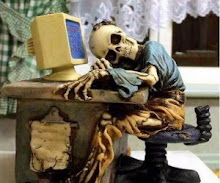
Showing posts with label living in the present. Show all posts

Wednesday, 10 December 2014

"We never keep to the present," said Pascal

I can't remember a better description of the destructiveness of ignoring the present moment than this:

"We never keep to the present. We recall the past; we anticipate the future as if we found it too slow in coming and were trying to hurry it up, or we recall the past as if to stay its too rapid flight. 

We are so unwise that we wander about in times that do not belong to us, and do not think of the only one that does; so vain that we dream of time that are not and blindly flee the only one that is. 

The fact is that the present usually hurts. We thrust it out of sight because it distresses us, and if we find it enjoyable, we are sorry to see it slip away. 

We try to give it the support of the future, and think how we are going to arrange things over which we have no control for a time we can never be sure of reaching. 

Let each of us examine his thoughts; he will find them wholly concerned with the past or the future. We almost never think of the present, and if we do think of it, it is only to see what light it throws on our plans for the future. 

The present is never our end. The past and the present are our means, the future alone our end. Thus we never actually live, but hope to live, and since we always planning how to be happy, it is inevitable that we should never be so."

Written a long time ago by someone who I doubt ever heard the term "mindfulness."


With thanks to Sarah for chasing down the whole passage, quoted to us during an excellent day with John Peacock.

Wednesday, 3 September 2014

Multi--tasking and mindfulness

It seems clear that women are better at multi-tasking than men. Whether that's because they have to be, or whether that's a good thing for any of us, is a different matter.

This woman seems quite cheerful about it all, though her little spud may be just about to delete a morning's work....Three people close to my heart have to do a lot of this sort of thing these days.

One thing is pretty definite; mental multi-tasking is not what you want in meditation, nor, says Larry Rosenberg*, in life.

"People sometimes ask "how can I get anything done if I do only one thing at a time?" Actually, we can be more effective. There is better attention and less tension when we do just one thing, and these factors more than balance the time that is saved by doing several things at once."

 I think he's not necessarily right in the short term - we're social animals, and sometimes our social (work) environment demands multi-tasking, but I'm sure we should avoid it when we can. I'm also sure he's absolutely right in the long term, because multi-tasking is a strain. It wears you out.

What he does urge us to do is to be pliable as well as steady in our attention. 

If a child runs into the room with a nasty cut and you're just filling the teapot with boiling water, it's multi-tasking time - no good saying "I just need to be mindful of the moment, and I'm making tea. Be with you in five." 

But even in this sort of instance, it's down to the quality of attention we bring to what we're doing. In fact, crises, even mini-crises like this one, often result in our being very firmly and clearly in the moment. But multi-tasking when you don't really need to, out of habit?

TS Eliot nailed it: "distracted from distraction by distraction."

Sounds to me like a definition of much of what's on Facebook....


* "Breath By Breath," Larry Rosenberg with David Guy.

Thursday, 23 August 2012

The Slow Olympics


I'm not being anti-Olympic events (except the ones I think are silly) but I am anti the ceaseless jabbering hype, the relentless trumpeting of nationality, the way our national team was "expected" to win medals, as if they owed it to us! (I write as a Brit.)

When I take over, this will be the model:

In  addition to the Fast/Superfit/Relentlessly Competitive Noisy Olympics, and the utterly wonderful Paralympics, there will be a Slow Olympics. cf the Slow Food Movement, I guess. More of that in a mo.

For the Fast Olympics:

There will be no national teams. People will compete as individuals. When they wish or need to form teams, they can use totemic or clan-type names. "The Sea Otters." "Lightning Strikes." etc

It follows that there will be no national anthems, or grandiose pseudo-national anthemic "Olympian" tunes.

There will be no hyper-expensive artificial facilities, unaffordable by many countries, and so encouraging events that are much more likely to be won by people from richer countries. Bikes will race on roads, not in velodromes. If a country hasn't got natural white water, then there won't be a kayak slalom etc. Events will be tailored to suit the host country. If we don't do that, the Olympic Sybaritic Pomp and Circumstance Committee will run out of nations wealthy enough to put the Fast Olympics on!

There will be no exclusive deals with multi-nationals offering sponsorship, and no products damaging to health will be allowed as sponsors. Heads of state will only attend as private individuals. Celebrations will be only and entirely for the skill, speed, endurance of individuals.

For the Slow Olympics:

There will be a gathering of people interested in the quality of their own lives, and therefore of the lives around them. The goal of any activities will be calmness, understanding, and compassionate insight. The vehicle for such insights will be beauty. People will sort themselves into various activity groupings, and they will be transported to sites of natural beauty, where they will  hike, bike, meditate, sing, dance, drink wine and chat, whatever is on offer. They could row, sail or canoe, provided they didn't race, provided the object of the exercise was - exercise, and living in the present moment. 

At any sign of haste (eg jostling for the "best" spot, wanting to hurry on because something even nicer is happening an hour later) participants will be asked if they would like to start the activity again. After participants have completed a certain number of experiences, they will be given a certificate celebrating their work in the Slow Olympics movement, and asked to move on so others can take part. They will be invited to share contact details with other certificate holders, to form an international network of people seeking to live in the present moment, to show care for themselves and those around them, to integrate themselves with the powers of nature and the universe, to...

Good God, is that the time already? Must dash....


Sunday, 19 December 2010

Jools Holland and Mindfulness

As Fats Waller used to say, "One never knows - do one?" In this case, one never knows where a mindful approach will turn up. Whilst leafing idly through the Saturday Guardian colour comic yesterday, trying to avoid the revolting blandishments of adverts for luxury goods from a previous era, I came upon a Q and A with Jools Holland, ex-pop star, excellent boogie pianist, leader of what must be the only big band left in UK (hope that's wrong) and of course TV presenter of odd manner and knowledgeably eclectic approach. (Just in case you've never heard of him.) Expecting something amusing but insignificant, I was delighted to find these pronouncements:

Q: "What is the closest you've ever come to death?
A: "Last night: sleep is its brother."

To which I say - spread the word, Jools.


Q: "What is the trait you most deplore in others?
A: I wouldn't like to make judgements."

One of the effects of mindfulness meditation is to make us less hasty to rush to judgements about others. This makes is easier to see where they are coming from, to see the whole picture of our interaction with them. It doesn't mean we accept any old nonsense from anyone, just that we should observe and think before seeking to reassure our fears and bolster our prejudices - which is surely what a lot of our judgements about people are actually used for.


Q: "What's your most unappealing habit?
A: You'd have to ask people who find me unappealing."

People sometimes call that sort of response "grounded" or "centred." I feel it shows a kind of realism and acceptance; I don't think he's just trying to be a smart-arse at the interviewer's expense, though it is quick-witted. He seems to me to be saying that naturally, and particularly given his fame, there are people who find him unappealing; they are the experts in such judgements- ask them.


But the one that startled me most was this - it was his opener:

Q: "When were you happiest?
A: Paradise is the moment you are in, so right now I'm happiest talking to you."

Whole books have been written expanding on that insight. If the present moment is the only place it's possible to live, then paradise, happiness, couldn't be anywhere else. (Nor could hell, of course.) He avoids putting happiness back in the past, he avoids making it a future fantasy. His presentmomentness is quite startling. What's the point of making comparative judgments about happiness? How are you right now? OK - happy - contented. Enough. You can't really categorise and analyse happiness, can you? If you try, it will evaporate. Happy memories are, of course, a delight, and so are future happinesses - say, a Christmas visit from family - but if I start wondering if this Christmas will be better than last, will the omnipotent grandson be as much fun as he used to be, will...it's nonsense. Gloria, enjoy, now, the pleasure of anticipating his visit. Then enjoy his visit. Grandson will be as grandson is. A wonder.

Jools says other pleasant and entertaining things too, but I didn't expect (prejudice, I guess) to find these sorts of potted insights in a star interview. I've no idea if he meditates, but maybe a mindful approach, wherever it comes from, helps him through the madness and pressures of the music/TV business.

So thanks, Jools, merry Christmas and a boogieful New Year.

Friday, 26 February 2010

Carpe Diem part 2

In part 1 I was worrying that maybe a fear of the dissolution of the self with no belief in an afterlife, or only a vague hope that there might be one, could be beneath some self-destructive and socially dangerous behaviour which otherwise I find hard to understand. The idea - which may be nonsense! - is that you may seize the day with a vengeance as a way of avoiding the truth about your own mortality. Blot it all out.

Here's a poem about a different attitude to "Carpe Diem." It's by a very popular Amercian poet, Billy Collins, and it seems to me eloquent and helpful in the way that good popular poetry can be.

Picnic, Lightning

It is possible to be struck by a
meteor or a single-engine plane while
reading in a chair at home. Pedestrians
are flattened by safes falling from
rooftops mostly within the panels of
the comics, but still, we know it is
possible, as well as the flash of
summer lightning, the thermos toppling
over, spilling out on the grass.
And we know the message can be
delivered from within. The heart, no
valentine, decides to quit after
lunch, the power shut off like a
switch, or a tiny dark ship is
unmoored into the flow of the body's
rivers, the brain a monastery,
defenseless on the shore. This is
what I think about when I shovel
compost into a wheelbarrow, and when
I fill the long flower-boxes then
press into rows the limp roots of red
impatiens -- the instant hand of Death
always ready to burst forth from the
sleeve of his voluminous cloak. Then
the soil is full of marvels, bits of
leaf like flakes off a fresco,
red-brown pine needles, a beetle quick
to burrow back under the loam. Then
the wheelbarrow is a wilder blue, the
clouds a brighter white, and all I
hear is the rasp of the steel edge
against a round stone, the small
plants singing with lifted faces, and
the click of the sundial as one hour
sweeps into the next.


You dig? as people used to say a long time ago - if you have a clear apprehension of your mortality it may make your life clearer, and the ordinary things you do filled with more meaning. Knowing your life will come to an end - I mean really knowing the truth of it, living with it, not just accepting it intellectually and theoretically - can help you to "look well to this day." And enjoy it.

That's surely the point of "memento mori." It was not to scare themselves that people had a skull on the desk, it was to make them realise the value of now. (Also of course to be good so they wouldn't burn in hell, but I hope you feel able, with me, to ignore that whole vicious bit of social control!)

Of course, it's perfectly possible simply to say "I'll worry about it when it happens, till then, sod it, mine's a double Jack Daniels on ice." That's saying a version of Woody Allen's joke "I don't mind dying but I don't want to be there when it happens."

Well, that might be OK if you go out like a light in your prime (though this may not be ideal for those who care about you...) but it won't help much if you decline slowly, and need some way to deal with it. It's ignoring and denying our mortality and it's a long way from Billy Collin's poem.

Whatever, we can only live in our days. Another poem for you:

Days

What are days?
Days are where we live.
They come, they wake us
Time and time over.
They are to be happy in:
Where can we live but days?

Ah, solving that question
Brings the priest and the doctor
In their long coats
Running over the fields.

Philip Larkin

What a trap he springs on us in this seemingly innocent and simple little poem. That final image I find the very stuff of a nightmare. It scares me back into today. Something to do with the long black coats, and they are running very fast and silently straight at you, over the fields. They aren't going to ring the bell and be shown into the lounge...

Carpe diem. Look well to this day. Be mindful of the present moment. Simple to say, hard to do.