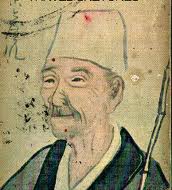
"In Bashō, as far as one can understand him through translation and commentary, what he sees is totally transparent to his humility. It becomes a vehicle for a kind of saintliness, a 'helpless' trust in the world as it blows him along his path, so that what he sees and writes about is in no real way to be distinguished from what he is. He feels love and compassion, for example, for the prostitutes who try to join him on his journey; but ultimately he knows that this love (caritas, or agape, as a Christian might call it) is not his business. If the gods or the great Buddhas wish to 'absent them from felicity awhile' to interfere and with compassion to help others on the way to enlightenment, that's their choice, but neither on them nor on us is it a mandatory demand.
The haiku is a sociable but not a social form. It is almost totally unrhetorical, having nothing to say to the will....Loneliness is the gift the haiku poet prizes above all, because it is the loneliness of detachment, not the bitter isolation of frustrated desire...haiku poets call it tenderness - fellow-feeling, a gentle acknowledgment that things exist outside yourself, which suffer and have their being in the Tao of enlightenment just as you do....
And a haiku must be slender because it makes no claim upon us other than an invitation to share its moment."
May I gently, in the spirit of tender loneliness Tony so eloquently describes, suggest you take a gander, if you don't already know it, at "The Narrow Road To The Deep North," Bashō, Penguin. *
*other editions are available - but there's only one Bashō, and there was only one Tony Conran.